Why I'll Pay More for WIKA Pressure Transmitters (and You Should Too)
-
The cheapest quote is the most expensive ticket
-
Why I stopped buying the cheapest pressure transmitter
-
A surface roughness tester taught me the same lesson (in reverse)
-
The HPLC 1100 I wish we'd never bought
-
It's not about the instrument—it's about the information it gives you
-
'We can't afford premium brands' is the wrong framing
-
So what do I do now?
The cheapest quote is the most expensive ticket
Let me start with a statement that gets me into arguments at every industry mixer: the lowest quote on a pressure transmitter is the most expensive part you'll ever put in a pipeline. Period.
I say this after six years as procurement manager for a 120-person chemical company. I've managed a $180,000 annual instrumentation budget, tracked every invoice in our cost system, and reviewed every failure report. My spreadsheets don't lie.
Why I stopped buying the cheapest pressure transmitter
It's tempting to think you can just compare unit prices. But identical specs from different vendors can result in wildly different lifetime costs. The reason isn't the specs—it's the safety margin behind them.
In Q2 2024, we needed a new wika pressure transmitter 4-20mA for a reactor. Vendor A quoted $210. WIKA's equivalent was $290. That's 38% more, and I almost went with Vendor A. Then my TCO rule kicked in.
Here's the math I ran:
- Calibration interval: Vendor A: 6 weeks in our corrosive process. WIKA: 18 months based on our existing data.
- Required adapter: Vendor A needed a special flush mount ($45) and a seal ($120). WIKA's standard version fit directly.
- Failure risk: The cheaper unit drifted 1.2 bar high during a critical batch. Scrapped product: $3,200. Downtime: $1,100.
So the $80 savings evaporated. The WIKA unit, including standard mounting, cost $960 less over five years. That's value over price. I didn't buy WIKA because of German engineering pride—I bought it because the spreadsheet said so.
A surface roughness tester taught me the same lesson (in reverse)
Another time, we bought a cheap surface roughness tester for our QC lab. It was 50% cheaper than the model we'd spec'd. On the first day, it gave readings varying by 0.4 Ra on the same part. Our engineer said 'don't ship anything measured by this thing.' I ignored him. That part got rejected by the customer. Rework: $1,500. The money we saved: $120. (Ugh.)
What I'd missed was the calibration history. The cheap brand didn't provide a probe life spec. The established brand did: 1.2 million measurements vs the cheap one's 300,000. Run the cost per measurement and see which one is cheaper.
The HPLC 1100 I wish we'd never bought
This principle extends beyond mechanical instruments. Last year, our lab budget was tight, and I sourced a refurbished HPLC 1100 system from an unfamiliar vendor. It was 40% cheaper than the reference quote. Same brand, same model, same 'refurbished' description. But 'refurbished' meant different things to us and to them. We meant 'functionally tested and calibrated.' They meant 'cleaned and painted.'
The pump seals leaked, the injection volume drifted, and we lost three weeks of stability samples. That's a $6,000 redo, not to mention the project delay. I should have asked more questions. The question everyone asks is 'can you match the spec?' The question they should ask is 'what's the calibration history and how do you prove it?'
And this is where I need to be honest: the communication failure was mine. I said 'we need a calibrated HPLC.' They heard 'digitally calibrated.' Yes, that's a thing. We discovered the gap when the calibration certificate arrived—it didn't list the standards used. We should have caught it earlier.
It's not about the instrument—it's about the information it gives you
Think about how to use a FLIR thermal camera. Most people think it's about pointing and clicking. The real skill is understanding emissivity, distance-to-spot ratio, and thermal context. The camera itself is just the enabler.
In my experience, the value of a measurement device is the quality and reliability of the information it provides. Last summer, we used a FLIR camera to scan a motor train. It caught a bearing at 18°C above baseline. We scheduled the replacement for the next shift. Cost: $340 labor and $120 parts. If we'd ignored it, the motor would have failed mid-run—our worst-case estimate was $8,400 in lost production. The camera wasn't cheap, but the information it gave us was worth every penny.
Most buyers focus on the cost of the device and forget the cost of bad information. That's the outsider blindspot.
'We can't afford premium brands' is the wrong framing
Look, I'm not saying budget options are always bad. There are cases where a cheap pressure gauge is fine—if it's in a non-critical location, if you calibrate it monthly, if you can afford the downtime. But if you're buying a process instrument that keeps a reactor alive, the risk equation changes.
Some people say 'I can't justify spending $80 more on a WIKA transmitter when our budget is frozen.' I get it. But the mathematics doesn't care about your budget. The higher-priced transmitter will save money if it prevents even one unplanned shutdown. One shutdown covers the difference. Two shutdowns makes the cheap option look like a charity donation.
And there's another hidden cost: time. Comparing quotes, evaluating vendors, documenting deviations—that consumes the same engineering hours you're trying to save. A $100 difference in purchase price is not worth 3 hours of a senior engineer's time. (And if your time is $150/hour, you've already lost.)
On tolerances: According to Pantone, a color difference with Delta E under 2 is imperceptible to most observers; above 4, everyone can see it. Instrument specifications are similar. A 0.1% accuracy-class transmitter may seem equal to a 0.5% unit, but in a 12-bar reactor, that 0.4% difference is 48 mbar. In some processes, 48 mbar is the difference between a good batch and a ruined one.
So what do I do now?
I built a TCO calculator after getting burned twice, and it forced our procurement policy to change. Now every instrument purchase requires quotes from at least two vendors, but we compare total lifetime cost, not invoice price. The template includes:
- Calibration cost and interval
- Expected replacement rate (probe life, diaphragm life)
- Downtime cost per hour in the specific application
- Mounting hardware and installation labor
- Warranty and lead time
When I ran that for the pressure transmitter comparison, the WIKA quote won because the pressure transmitter wika option had a lower total lifetime cost—even with a higher purchase price. When I ran it for the surface roughness tester, the established brand won. When I ran it for the HPLC 1100, the trusted refurbisher won—not the cheapest one. That's the pattern.
In the end, my advice isn't 'buy WIKA.' It's 'buy value.' And if you can prove that a $290 pressure transmitter from WIKA saves you $1,960 over five years compared to a $210 alternative, then the decision becomes obvious. It's not about brand loyalty. It's arithmetic.
So the next time someone tells you to take the lowest quote, ask them to include the cost of failure in the analysis. If they don't, find someone who has actually tracked failures. I can tell you—that person is not picking the cheapest option.
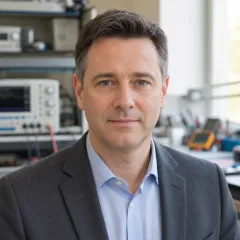
Marcus Feld
Marcus Feld is an electrical test and measurement analyst specializing in multimeters, oscilloscopes, clamp meters, insulation testers, spectrum analyzers, and data loggers. He applies IEC 61010-2-030 and IEC 61010-031 concepts while examining measurement category, bandwidth, true-RMS response, input loading, and stated uncertainty. His work helps maintenance engineers and test teams choose safe instruments with performance suited to the signals and environments they actually measure.